
1-877-4-SPRUCE | info@aircraftspruce.com
Aircraft Spruce & Specialty Co.
Aircraft Spruce & Specialty Co.


 Contact Us
 Call Us
 Sign In
 FREE SHIPPING ON ORDERS OVER $350 (SOME EXCLUSIONS APPLY) | 877-4-SPRUCE
- Photo may represent series and not specific product
- SHARE


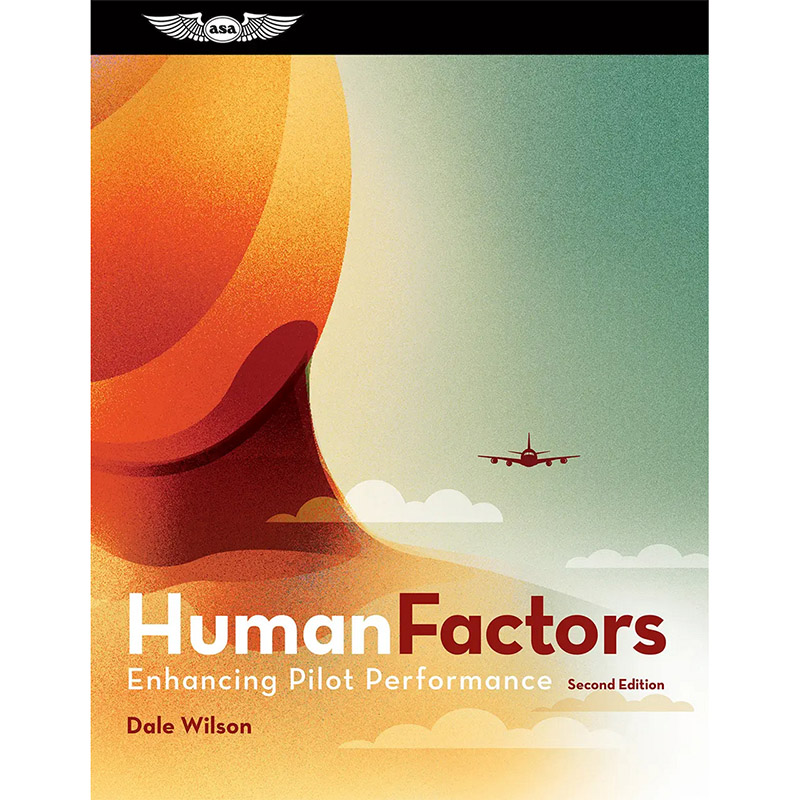
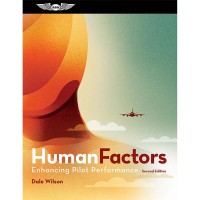
ASA Human Factors (Hardcover)
$72.75/Each
Part# 13-23250
MFR Model# ASA-HUMAN2
MFR Model# ASA-HUMAN2
 FREE Shipping
Overview
|
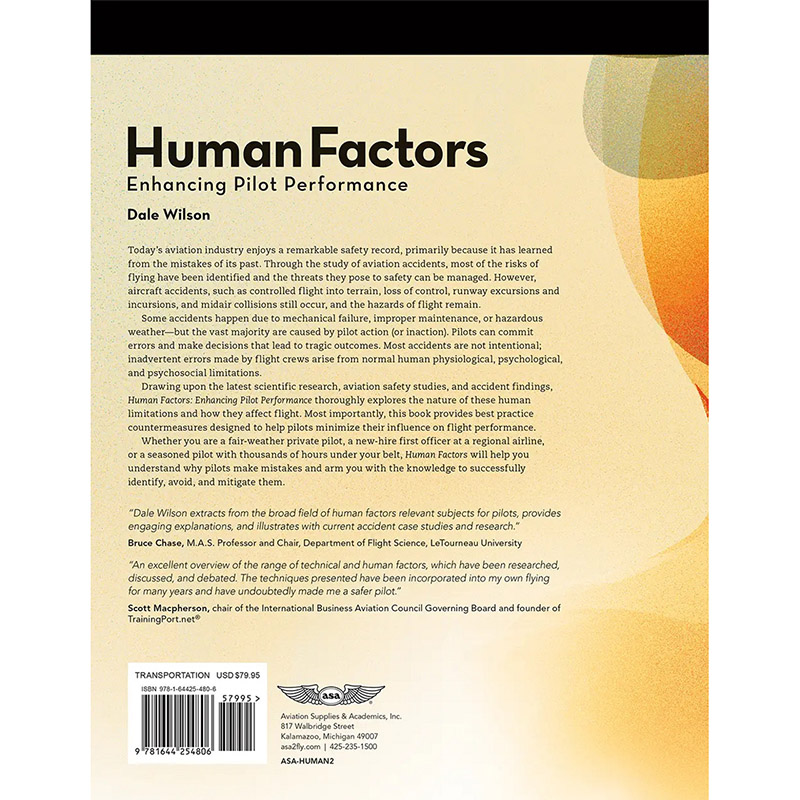
Today’s aviation industry enjoys a remarkable safety record, primarily because it has learned from the mistakes of its past. Through the study of aviation accidents, most of the risks of flying have been identified and the threats they pose to safety can be managed. However, aircraft accidents, such as controlled flight into terrain, loss of control, runway excursions and incursions, and midair collisions still occur, and the hazards of flight remain.
Some accidents happen due to mechanical failure, improper maintenance, or hazardous weather—but the vast majority are caused by pilot action (or inaction). Pilots can commit errors and make decisions that lead to tragic outcomes. Most accidents are not intentional; inadvertent errors made by flight crews arise from normal human physiological, psychological, and psychosocial limitations. Drawing upon the latest scientific research, aviation safety studies, and accident findings, Human Factors: Enhancing Pilot Performance< thoroughly explores the nature of these human limitations and how they affect flight. Most importantly, this book provides best practice countermeasures designed to help pilots minimize their influence on flight performance. Whether you are a fair-weather private pilot, a new-hire first officer at a regional airline, or a seasoned pilot with thousands of hours under your belt, Human Factors will help you understand why pilots make mistakes and arm you with the knowledge to successfully identify, avoid, and mitigate them. |
 |
WARNING: Cancer and Reproductive Harm - www.P65Warnings.ca.gov. |
Author Details
- Dale Wilson, M.S., is Emeritus Professor of Aviation at Central Washington University in Ellensburg, Washington, where he has taught courses in aviation safety management, aerospace physiology and psychology, and threat and error management since 1996. He holds a master’s degree in aviation safety from the University of Central Missouri and a bachelor’s degree in psychology from Trinity Western University in British Columbia, Canada. Professor Wilson, a pilot for 45 years, has logged several thousand hours in single- and multi-engine airplanes in the United States and Canada. He holds several professional FAA pilot certifications, including Airline Transport Pilot, Advanced Ground Instructor, and Instrument Ground Instructor. While in Canada, he held the Airline Transport Pilot License and Class 1 Flight Instructor Rating—the highest of four levels of flight instructor certification.
- At Central Washington University he received several awards for outstanding teaching and scholarship in the Department of Aviation, including the Excellence in Teaching award from the College of Education and Professional Studies. He was also nominated for the Central Washington University Faculty Senate Distinguished Professor of Teaching award. He earned the biennial Master Flight Instructor designation seven times (1999 through 2013), and the Master Ground Instructor from 2013 through 2017, from the National Association of Flight Instructors. He also served as an Aviation Safety Counselor and later as an FAA Safety Team Representative for the FAA’s Spokane Flight Standards District Office.
- His primary research interests include visual limitations of flight, pilot decision making, and VFR flight into instrument meteorological conditions. He has authored and co-authored more than 20 articles and papers related to flight crew human factors which are published in scholarly journals and professional aviation magazines. These include Flight Safety Foundation’s AeroSafety World and Human Factors and Aviation Medicine; the Journal of Aviation/Aerospace Education and Research; the International Symposium on Aviation Psychology; NAFI Mentor; and Transport Canada’s Aviation Safety Letter. He has also given numerous safety-related presentations at conferences and seminars in the U.S. and Canada. Published by ASA in 2014, his co-authored book Managing Risk: Best Practices for Pilots describes many of the major threats to safe flight operations, offers insights into how and why pilots make errors that exacerbate them, and provides best-practice countermeasures needed to successfully manage them. You can reach the author on LinkedIn or at Dale.Wilson@cwu.edu.
Specifications
- Edition: Second
- Effective Date: 2025
- Page Count: 488
- Illustrations: Color throughout
- ISBN Number: 978-1-64425-480-6
- Dimensions: 8.25 x 10.75 inches
- Copyright: © 2020-2026 Aviation Supplies & Academics, Inc. All rights reserved.
- Date Published: 2025
- Search: True




Q&A
Please note, Aircraft Spruce ®'s personnel are not certified aircraft mechanics and can only provide general support and ideas, which should not be relied upon or implemented in lieu of consulting an A&P or other qualified technician. Aircraft Spruce ® assumes no responsibility or liability for any issue or problem which may arise from any repair, modification or other work done from this knowledge base. Any product eligibility information provided here is based on general application guides and we recommend always referring to your specific aircraft parts manual, the parts manufacturer or consulting with a qualified mechanic.
